
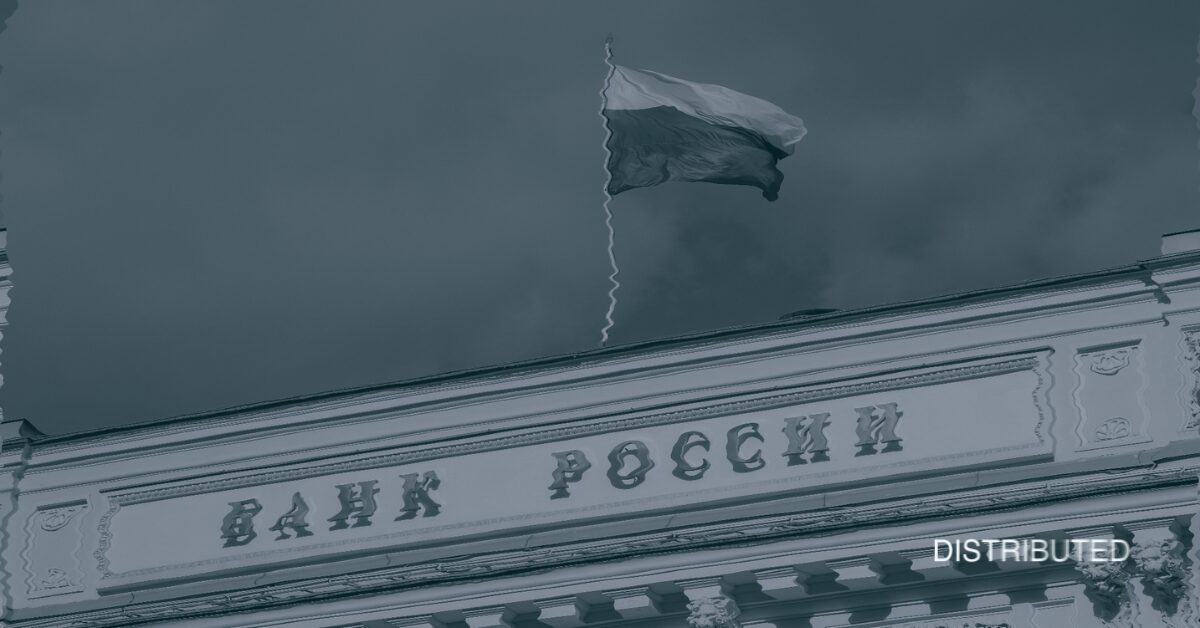
For the first time since Moscow began its large-scale nationalisation drive, Russia’s central bank has publicly pushed back against how the government has been seizing private assets. According to sources quoted by Reuters, the bank ruled that the state violated shareholder rights in one of its recent takeovers, marking a rare challenge to the Kremlin’s increasingly aggressive economic policies.
Since the conflict in Ukraine began, the Russian state has taken control of tens of billions of dollars’ worth of assets, including those owned by foreign investors and Russian billionaires. While this has helped the government consolidate control over strategic sectors, it has also raised alarm among parts of the country’s economic establishment. Some officials and business leaders see these seizures as a dangerous return to Soviet-style centralisation, where the state dominates all major areas of the economy.
The latest dispute centers on the takeover of gold mining company UGC, one of Russia’s largest producers. After the government seized a majority stake in the firm, the Moscow Stock Exchange filed a formal complaint with the central bank. The complaint argued that the state failed to follow legal procedures that protect minority shareholders, specifically by not making a mandatory buyout offer to smaller investors as required under Russian law.
The central bank agreed, saying that the state had breached its obligations and directed the state property agency to execute the necessary buyout. Market insiders described the decision as a direct challenge to the way nationalisations are being handled. One person familiar with the case said that the state’s actions in the UGC takeover were undermining what little remains of private property rights in Russia.
Private investors who had purchased UGC shares on the open market said they were left out of the process entirely. One investor remarked that when property is being nationalised, it seems that the law no longer applies. Another warned that actions like these could destroy trust in Russia’s stock market, asking who would be willing to buy shares after witnessing such state behavior.
See Related: Will Russia Ban Bitcoin? Likely Not; Here’s Why…
Russia’s Biggest Stock Listings
UGC went public in 2023 in one of Russia’s biggest stock listings of the year, attracting many retail investors who saw gold as a stable investment in uncertain times. About 10% of its shares are held by individual Russian investors. Now, many of them fear their holdings could lose value due to state interference.
Legal experts confirm that Russian law requires any shareholder acquiring more than 30% of a company to offer to buy out other shareholders within 35 days, with no exceptions for government entities. The government, however, has largely ignored these rules in its rush to seize assets. Since the start of what Moscow calls its “special military operation” in Ukraine, the state has taken control of roughly $50 billion worth of assets. These include subsidiaries of Western companies such as Danone and Carlsberg, as well as domestic firms accused of corruption or mismanagement.
Critics argue that the wave of nationalisations amounts to the largest redistribution of property since the 1990s, when Soviet assets were sold off cheaply during privatisation. Until now, there had been little internal resistance to the process. But the UGC case appears to be changing that.
Sergei Shvetsov, chairman of the Moscow Stock Exchange and a former deputy head of the central bank, voiced rare public criticism of the government’s handling of public companies. He said the state must first follow the rules it creates, warning that inconsistent behavior is eroding investor confidence. This, he noted, contributes to what analysts call the “Russian discount” — the lower valuations of Russian assets compared to global peers. The country’s main stock index has fallen about 30% since early 2022, reflecting that sentiment.
Adding to the uncertainty, officials admit there is currently no budgeted money available to carry out mandatory buyouts. To speed up asset sales, President Vladimir Putin recently signed a decree allowing seized property to be sold more quickly. Soon after, a private copper producer, UMMC, emerged as the likely buyer for UGC’s confiscated stake, which the finance ministry hopes to sell by the end of October for around 100 billion roubles, or $1.23 billion.
Central bank officials have warned that if the government continues to disregard basic property rights, it will scare off investors even after the war ends. They argue that to restore market confidence, the state must show it respects the same laws it expects others to follow. Otherwise, any talk of attracting capital, foreign or domestic, will remain just that.

