
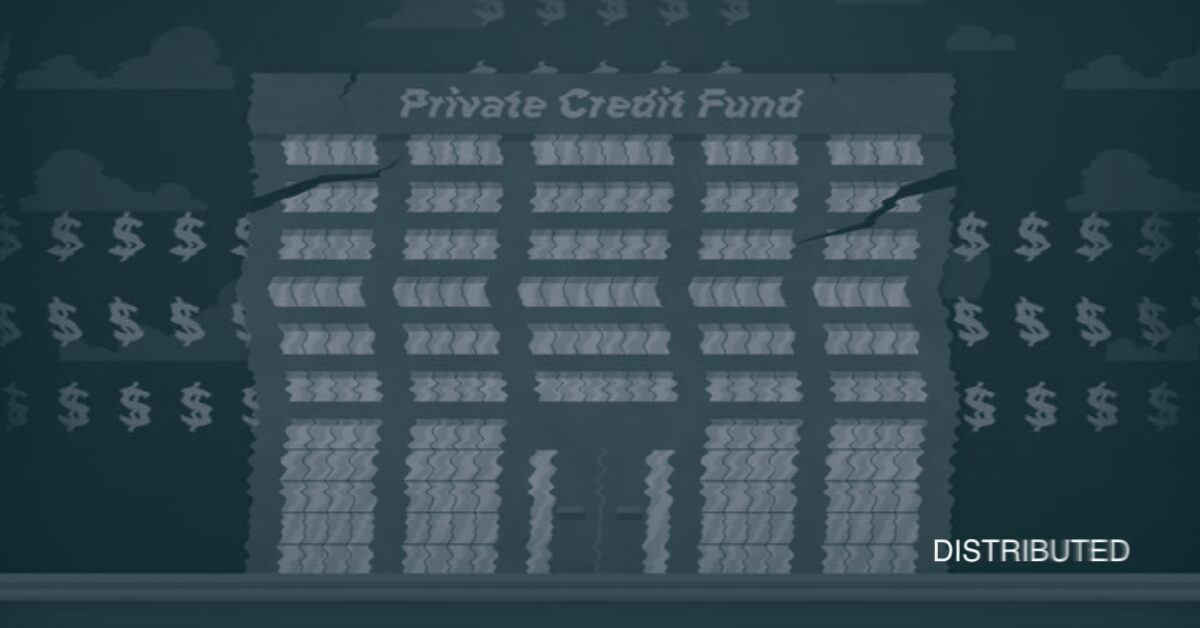
The Federal Reserve is stepping up its oversight of the financial system by asking major U.S. banks to disclose their exposure to private credit firms. The move comes at a time when the rapidly growing private credit market is showing signs of strain, raising concerns about whether risks in this sector could spill over into the broader economy.
Private credit, a form of non-bank lending that has expanded significantly over the past decade, has become a key source of financing for companies outside traditional banking channels. However, recent developments suggest that the sector may be entering a more fragile phase. A surge in investor redemptions and a rise in troubled loans have prompted regulators to take a closer look at how deeply interconnected banks are with these funds.
According to reports, the Fed’s inquiry is focused on understanding the scale of potential stress within private credit and assessing whether it could pose systemic risks. While private credit operates largely outside the traditional banking framework, its growing size, estimated at around $2 trillion, means that any instability could have wider implications for credit markets.
Recent market conditions have not been favorable for private credit firms. A broader downturn has put pressure on asset valuations, while concerns about lending standards have intensified following several high-profile corporate bankruptcies. These factors have led some investors to pull back from private credit funds, increasing redemption pressures and forcing some firms to limit withdrawals.
See Related: Citi Urges Investors To Seize The Moment In US Banking Sector Amid Industry Turmoil
Traditional Banks And Lending Standards
At the same time, traditional banks have begun tightening their lending standards, which could further complicate the situation. As banks become more cautious, companies that rely on private credit may find it harder to access financing, potentially creating a feedback loop that amplifies stress within the sector.
The issue has also caught the attention of other regulators. The U.S. Treasury Department is planning discussions with both domestic and international insurance regulators to evaluate the potential risks posed by private credit markets. This coordinated approach highlights the growing recognition that non-bank lending is now a critical component of the global financial system.
Despite these concerns, policymakers have so far maintained a measured stance. Jerome Powell recently indicated that while the Fed is closely monitoring developments in private credit, there is no immediate evidence that problems in the sector are spreading to the wider financial system. Similarly, Alberto Musalem has noted that financial conditions remain broadly supportive, with stress largely contained within private credit itself.
This cautious optimism reflects a key distinction between today’s financial landscape and past crises. Unlike traditional banking systems, private credit operates with less leverage and fewer maturity mismatches, which may limit the risk of rapid contagion. However, the lack of transparency and regulatory oversight in the sector also makes it harder to fully assess potential vulnerabilities.
For investors and market participants, the Fed’s inquiry serves as a reminder that the era of easy money and rapid credit expansion may be giving way to a more disciplined environment. As interest rates remain elevated and economic uncertainty persists, both banks and private lenders are likely to face increased scrutiny and pressure to strengthen risk management practices.
In the coming months, much will depend on how private credit firms navigate the current wave of redemptions and loan stress. If conditions stabilize, concerns about systemic risk may ease. But if pressures intensify, the Fed’s proactive approach could prove crucial in preventing localized problems from escalating into broader financial instability.
Ultimately, the situation underscores a broader shift in global finance, where risks are no longer confined to traditional banks but increasingly reside in the shadows of the financial system. As regulators adapt to this evolving landscape, the spotlight on private credit is likely to remain firmly in place.

